

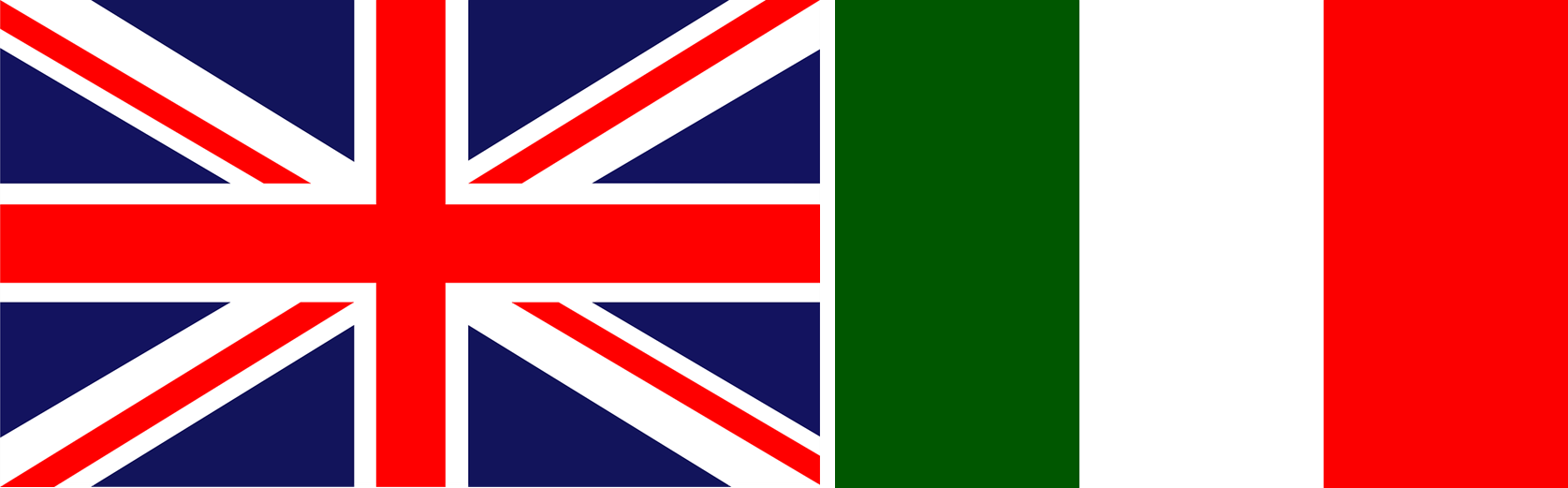
Lily Haffenden, Ellie-Mae Hougham and Bronislava Zapotokova take a deep dive into the British and Italian education systems
Recently we had the pleasure of interviewing both our international and British students to enquire into the differences between the school systems in Italy and England. Our British and Italian students enlightened us about the pros and cons of both systems and produced very different answers!
The British Education System
What do you think is the biggest problem about the British Education system?
I think the biggest problem with the British Education system is that all students are expected to meet the same standards. I believe that there should be more personalisation in courses regarding teaching methods used for each student. Every student is different and has different methods of learning.
If you could change one thing about the British education system, what would it be?
Teachers should have frequent 1:1s with students to make sure their learning is going smoothly and stress-free. Students are under a lot of pressure these days to succeed as well as their peers and national standard.
What is the biggest benefit about being in a sixth form college?
There are so many more learning opportunities and independence than at school.
Would you like to study abroad?
I would love to study or live abroad, I love the idea of travelling, learning and exploring new places. It has always been a dream of mine to go travelling with friends or even on my own.
Would you like to go to university, considering the high fees?
I love the idea of university; however, I don’t think it’s best suited for me at the moment because I would prefer to go straight into work as a hairdresser after I leave college. However, I am considering going to university later in life, if I feel it is right for me at that time.
The Italian Education System
When do you start going to school in Italy and until when is it compulsory?
We start primary school at six years old and we have to go until we are sixteen. It is optional to then choose to study afterwards until you are eighteen or nineteen, but most people do because it gives you more qualifications and opportunities.
Do you have different types of school?
After Middle School, we can choose to go to schools with specialisms. There are schools that focus on humanities, science, art, general knowledge or the one I attend: linguistics. The scientific schools are more popular though, as they give you more opportunities for work.
How different are the subjects here in the UK to Italy?
There is a huge difference between Italy and the UK! First of all, even though we choose specialised schools, we still have to take all of the subjects offered to us so we have some sort of general knowledge in all areas. For example, my school’s priority is languages. However, I still need to learn subjects such as physics, chemistry, maths, philosophy, art, history and many more. The difference is — I can’t choose my subjects in Italy. Also, in the UK, I have about twelve hours of classes compared to thirty hours per week in Italy!
Do you think it’s better to intensely focus on fewer subjects rather than have more subjects with less depth to them?
This is a difficult question. It really depends on the person. If you are sure about what you want to study, having just three or four subjects which you can focus on might be more beneficial. But if you cannot decide, the general knowledge that the Italian school system provides can be just as useful.
In conclusion, interviewing these students showed us how different each education system is. We thought that one of the main differences is independence: British students in college only do three or four subjects with just over twelve hours a week of teaching but they are expected to study much more on their own whereas in Italy, there are more subjects that students must take so more teaching is involved. Which approach would you prefer?


