By Sofia Visco
The colour pink was recently decreed to be the colour of the year 2023 thanks to the release of Greta Gerwig’s film “Barbie”, starring the actors Margot Robbie and Ryan Gosling. Pink is traditionally linked to the iconic doll from which the film takes its name, and it is definitely the dominant colour in the film.
This pink invasion was anticipated by fashion designer Valentino with his “Valentino Pink PP Collection” presented last autumn. But few have really focused on the historical and cultural importance that the colour pink itself has had within Western society, and it is represented very effectively in the film. In recent decades the colour pink has been rejected by many feminists. But pink is now being reclaimed by women, ironically adopting various shades of pink to combat gender stereotypes. But to gain a better understanding of the colour’s evolution over time, we must go back several decades.
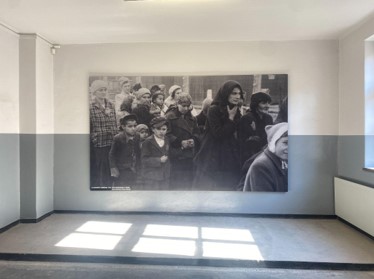
The first thing to know is that the association between the colour pink and the feminine occurs only in recent times. For centuries, pink remained asexual. Pink and blue, along with other pastel colors, were introduced into children’s clothing in the mid-nineteenth century but did not imply any gender signifier. It was during the 1930s and 1940s things began to change: men began to wear increasingly dark colors, associated with the business world, to stand out from the light colors perceived as more feminine and related to the domestic sphere. For example, in Nazi Germany, prisoners in concentration camps accused of homosexuality, that is, of being “effeminate males”, were marked with a pink triangle. In the 1950s, pink became identified with women and became ubiquitous not only in clothing but also in consumer goods, household appliances and automobiles aimed at the female market. The Barbie doll was introduced into the market in those years and consolidated the feminization of the colour. However, pink associated with femininity was heavily criticized during the 1960s and 1970s, with the spread of the feminist movement and the questioning of traditional gender roles. However, it was the 1980s that definitively imposed the idea of colours that markedly signalled the child’s gender.
But back to the Barbie film: you can in fact notice how initially when “Barbieland” (the fictional city populated only by Barbies and Kens) belongs and is governed by Barbies, everything, from buildings to costumes and household objects are pink, and Ken also wears clothes of a pink colour, without being considered less “male”. However, as soon as the Kens take possession of the land, bringing it inside the patriarchal regime, the colours change drastically, even the clothing, leaving very few traces of the previous ones. This visual device is used by the director to make us understand how Western society still perceives pink to be linked solely to femininity and how it can not be interchangeable between genders.
Obviously the purpose of the film is to make us understand how this colour should not be kept only for women but can be easily interchanged between both the male and female genders, without the usual prejudices that unconsciously every one of us possesses. Let’s hope that Barbie continues to help us reclaim pink.